
A well-functioning homeowners association (HOA) needs board members with integrity and professionalism as its backbone. However, without a specific and clear guide to frame this, members are prone to dysfunction. A HOA board code of conduct eliminates that risk.
What is the HOA Board Members Code of Conduct?
The HOA board members’ code of conduct is a formal document outlining what is expected from the directors when it comes to their behavior and responsibilities. It becomes the foundation of trust between the board and the HOA residents, as well as among the directors themselves.
Why Adopt a HOA Board Code of Conduct?

Having a proper and well-designed code of conduct for board members helps ensure good governance in an HOA. It does so in numerous ways.
1. It Helps Promote Responsible Leadership
As part of the HOA board, directors have the duty and responsibility to act in the best interests of the HOA and the community. Having a code of conduct helps ensure that board members make decisions in good faith.
However, having “good faith” alone is not enough. The code of conduct also ensures that directors’ decision-making is conducted with due diligence. It calls for them to consult credible sources and avoid any conflicts that could jeopardize residents’ trust in the board.
2. It Helps Ensure Transparency
The code of conduct also outlines a board member’s responsibility to stay transparent. In tandem with due diligence in decision-making, the code also ensures that the necessary information for a decision is communicated to residents.
3. It Prevents Conflict of Interest
When in a position of power, it can be tempting to act for your own personal gain. Although that would run the risk of diminishing resident trust for board members.
The HOA board code of conduct ensures that a well-functioning HOA avoids this. Following it prevents board members from making decisions or using HOA resources to benefit a select few. This ensures fairness in any decisions made by the board.
4. It Protects the HOA and the Community
Most HOA boards handle many residents’ sensitive information. As part of their responsibilities, directors have the duty to protect them and ensure confidentiality. This avoids the misuse of such information to gain a malicious advantage over the HOA and its residents.
5. It Promotes Positive Behavior
As leaders of the community, HOA board members would be looked to by many residents as models. Therefore, it’s crucial to maintain good and respectful behavior.
While disagreements and conflicts are inevitable, the code of conduct calls for them to be handled professionally. Doing so helps you focus on opening a dialogue to resolve issues rather than resorting to personal attacks.
Following these will help promote a culture of respect, which is essential in creating a thriving, tight-knit community.
A Code of Conduct to Follow
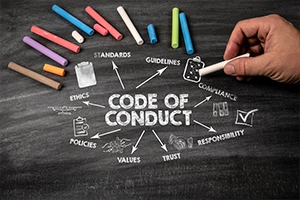
To achieve the positive benefits of an HOA board code of conduct, HOAs also need to design and draft it properly. It needs to include clear guidelines and expectations that cover all key aspects.
Here are points that you need to include in your HOA board’s code of conduct:
1. Confidentiality
Board members are entrusted with private and sensitive information. These include anything from homeowner information, violation records, and even legal matters.
Since the board is expected to protect this information, the code of conduct should outline confidentiality guidelines. It may include safeguards to prevent this information from leaking, a proper channel for documentation requests, and guidelines on what can and cannot be publicly disclosed.
Having such guidelines both protects homeowners and keeps the board away from any potential liability.
2. Professional Behavior
The code of conduct should set expectations for professional behavior among board members.
Even though directors are essentially volunteers, they are expected to take their responsibilities seriously. This means they should act respectfully in both board and general HOA meetings, respond appropriately to resident concerns, and manage conflicts civilly.
3. Neutrality
The board represents the entire HOA community, not just a select few. As such, they need to base their decision-making in a neutral and objective manner. The code of conduct should be based on hard facts and the governing documents, rather than favoritism. It helps promote equality among all homeowners in the community.
4. Fair Rules Enforcement
Neutrality also comes into play when enforcing community rules and guidelines. Selective enforcement tends to erode residents’ trust in the board. Because of this, it is common sense to avoid it completely.
In a strong code, board members are required to enforce community rules and guidelines fairly and consistently. Going against this risks the board losing credibility and opens the possibility of lawsuits.
5. Financial Management

In addition to how they should act, the code of conduct outlines the directors’ responsibilities to the community. Part of that is financial management.
A well-designed code of conduct should include stipulations on how the board should handle the HOA’s finances. After all, they are trusted by the community to manage the neighborhood’s budget.
The code needs to emphasize that the board should handle finances accurately, wisely, and with transparency. Otherwise, the HOA is prone to financial mismanagement, which can critically harm your community.
6. Behavior in HOA meetings
The way a board member acts in an HOA meeting could easily reflect the type of governance your association may have. A dysfunctional board during a meeting may prevent sound decisions from being made, to the detriment of the community.
The code should include expectations for conduct during an HOA meeting. Having these provides structure and order to the meeting. This provides the right avenues for directors to make decisions that benefit all. Clear and respectful communication, free of disruptive remarks, ensures that all facts and points of view are thoroughly considered.
7. Compliance
As leaders of the HOA community, the board members should be the first to comply with the HOA’s governing documents. The code reinforces the directors’ obligation to run and manage the HOA in accordance with these rules. Doing so helps the board avoid instances of selective enforcement, claims of misconduct, and lawsuits.
HOA Board Code of Conduct vs HOA Board Code of Ethics
While often used interchangeably, the HOA board member code of ethics differs from the code of conduct. There are two sets of guidelines that complement each other, but they address different aspects.
Simply put, the code of ethics usually governs the moral aspect of decision-making. It mainly concerns broader moral principles, such as honesty and integrity.
Meanwhile, the code of conduct, though it involves morals, mainly governs actions. It’s more specific, in that it provides standards and expectations that guide interactions and decision-making.
Guiding the Community’s Backbone
As the HOA board members lead and support the community, doing so with the proper mindset and behavior sets the entire HOA up for success. An HOA board code of conduct guides directors in governing the association effectively and with integrity.
CWD Group offers HOA management services, including code-of-conduct creation and enforcement, to community associations in Oregon and Washington. Call us today at 503-488-2008 or contact us online!
Related Articles:
- HOA Election Recalls On The Rise: Why Is This Happening?
- HOA Collection Policy: What To Do With Increased Delinquencies
- 7 Key Differences Between Low Rise And High Rise HOA Management