
High rise HOA management comes with a unique set of demands that set it apart from managing low rise communities. These differences are not always obvious at first glance, especially for volunteer boards that have little to no experience in the field. Understanding how these two communities operate will allow the board to make better decisions.
What is High Rise HOA Management?
High rise HOA management refers to the administration and operation of a multi-story residential building, typically with seven or more floors. In such setups, the association is typically responsible for maintaining complex shared systems and interior common areas. Another term for this is high rise condo management, as most high-rise residential buildings are condominiums.
What is Low Rise HOA Management?
Low rise HOA management refers to the administration of a community made up of townhomes, garden-style condominiums, or single-family homes. Here, shared infrastructure is limited. Owners typically maintain more of their own properties, while the association maintains common elements and spaces.
Low Rise vs High Rise Association Management: What are the Differences?
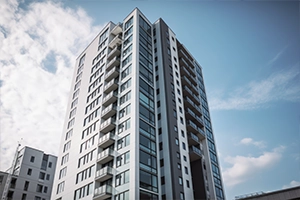
The key difference between high-rises and low-rises lies in their structure. High-rise communities tend to have multiple stories, whereas low-rise communities stand closer to the ground. This naturally leads to differences in how these communities are managed.
1. Building Structure and Systems
With high-rise HOA management, shared systems require constant monitoring. Specialized vendors must maintain elevators, central HVAC systems, fire suppression systems, and parking garages.
Meanwhile, low-rise HOA management is confined to single-family homes, townhomes, or garden-style condos. This means fewer shared systems to oversee, with more responsibility falling on individual owners. Infrastructure is simpler.
2. Maintenance Responsibilities
In high-rise communities, the association maintains the building structure, mechanical systems, and interior common areas, such as hallways and lobbies. Boards must schedule frequent inspections and preventive maintenance, which tends to be more intensive.
In low-rise communities, the HOA often maintains landscaping, roads, and amenities. Owners may handle roofs, HVACs, and interiors. Maintenance demands are more limited and less ongoing.
3. Budgeting and Financial Complexity
High-rise associations require larger budgets due to their more extensive needs. Boards must deal with higher operating costs, including utilities, staffing, and equipment maintenance. These vertical buildings also tend to require more detailed reserve studies and deeper funding.
In contrast, low-rise associations can get away with smaller budgets, depending on the size of the community and the nature of their amenities. Shared expenses are more limited, and reserves only need to address shared elements, which are few and far between.
4. Staffing and Operations
More often than not, high rise HOA management requires on-site staff. This includes building managers, front desk or concierge, maintenance teams, and security personnel. These communities operate more like a full-service facility, requiring professional help.
In comparison, low rise HOA management doesn’t require on-site staff. Board members can manage these communities on their own or enlist the help of a professional management company. The work is less hands-on, with no need for in-house maintenance teams or front desks.
5. Rules and Enforcement
While both communities have rules to enforce, they tend to be stricter in high-rise neighborhoods. This is due to shared living spaces and the units’ attached nature. Noise and odors, for instance, can travel easily between walls.
In low-rise neighborhoods, residents experience fewer day-to-day conflicts. The rules may regulate resident behavior, but there’s also a large focus on exterior appearance, landscaping, and parking.
6. Risk and Liability
Believe it or not, high-rise communities face higher liability exposure due to shared systems, such as elevators, fire systems, and utilities. These associations require more comprehensive insurance coverage as a result.
On the other hand, low-rise communities don’t have to manage as much risk. Sure, there’s still risk involved, but not to the extent that high-rise communities face. Overall, low-rise associations have lower risks and fewer shared hazards.
7. Owner Experience
Lastly, high-rise and low-rise associations differ in owner experience. High-rise buildings offer more apartment-style living and rely heavily on the HOA. Owners also interact more often with staff members.
Meanwhile, low-rise neighborhoods offer more independence for residents. Owners handle more of their own properties, with less daily involvement from the association.
Similarities of Low Rise and High Rise HOA Management
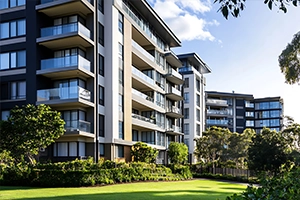
High-rise and low-rise communities may differ, but they also share similarities. For one thing, both types of associations must follow state laws and local ordinances. They are also both regulated by governing documents, such as the CC&Rs and bylaws. The legal foundation is essentially the same.
Both high-rise and low-rise associations also rely on a board of directors. Owners elect these directors, who work on a volunteer basis (unpaid). These board members have fiduciary duties to fulfill. This includes the duty to act within the community’s best interests.
This board is responsible for managing the community. Work, of course, is more complex and extensive for high-rise boards than for their low-rise counterparts.
Another thing both high-rise and low-rise communities must deal with: finances. These associations must prepare budgets, collect dues, fund reserves, and create financial reports. They also both have rules concerning property use, maintenance standards, and resident behavior.
Association boards can’t do everything alone, necessitating third-party vendors. Both low rise and high rise HOA management relies on vendors for professional services.
In terms of legal compliance, both communities must hold open board meetings and keep records. Owners must also have access to these records and examine them as per ORS 94.670 (for HOAs) and ORS 100.480 (for condos).
Finally, at their core, both associations have a goal of preserving property values. They achieve this goal by maintaining the community, enforcing rules, and keeping residents satisfied.
When in Doubt
In short, high rise HOA management is more complex and hands-on, where as low rise HOA management is simpler and requires less daily oversight. Due to inexperience or a lack of time, boards for both types of communities may be ill-equipped to handle management responsibilities. Fortunately, management companies offer a wide range of services, including high-rise and low-rise management services.
CWD Group provides management services to both high-rise and low-rise communities. Call us today at 503-488-2008 or contact us online to learn more!
RELATED ARTICLES:
- HOA Collection Policy: What To Do With Increased Delinquencies
- HOA Coup: When Homeowners Revolt Against The Board
- Average HOA Fee In Oregon: Why It’s Top 3 In The U.S.